Interview • Portraits
Five questions with David Burke Chief Executive at London Philharmonic Orchestra
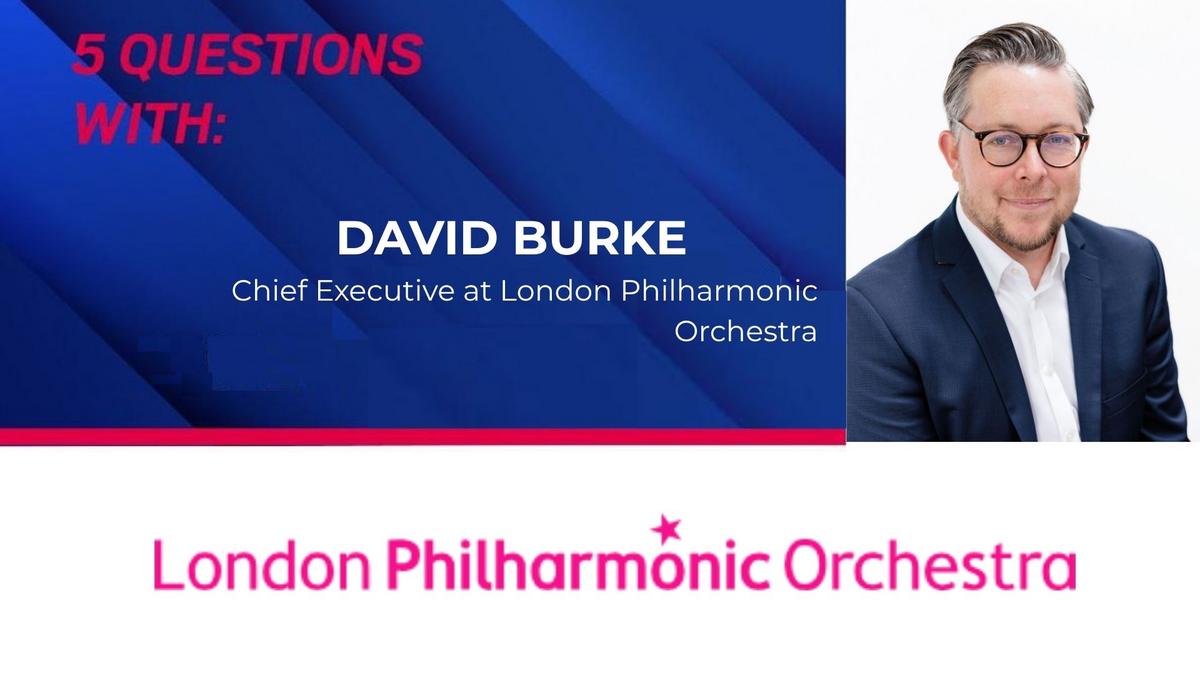
We interviewed David Burke, Chief Executive of the London Philharmonic Orchestra, about his career journey and the vision shaping one of the UK’s leading orchestras today. Having spent over 16 years with the organisation, he reflects on the key milestones that have influenced his leadership and his commitment to making orchestral music more accessible and inclusive. From community engagement initiatives on the UK's South Coast to the Orchestra’s strategic priorities around artistic excellence, sustainability, and audience development, David shares how the LPO is evolving to connect with wider and more diverse audiences. He also highlights the importance of cultural exchange and the role of Franco-British collaboration in strengthening ties across the arts and business communities.
1. David, could you briefly share your career journey and the key milestones that shaped your vision for the LPO?
I grew up in Doncaster, which is a former mining town which has only limited access to culture. Luckily, however, I attended a really good school where I played music every day. That’s how music became such a big part of my life and opened up the world to me. I went on to create the UK’s first-ever degree in Management & Music, which was an opportunity to align my two passions, but in retrospect, it looks very strategic. Next came promoting and running small concerts and festivals, then a role with the national arts organisation English Touring Opera, where I took music to communities across the country –another passion of mine. From there, I moved to the LPO, spending a decade as General Manager before becoming Chief Executive.
As someone who comes from a non-musical family, I share my colleagues’ innate love of music with a passion for access and equality, combined with a semi-outsider’s view of how people in wider society may perceive orchestral music. This has led to me to put a strong focus on the LPO’s humanity around music-making.
Our guiding principle at the LPO is ‘artistry on stage and humanity beyond’. While the two are inherently linked, what's really special for the Orchestra is leaning into the humanity aspect. This applies equally to our organisational culture and the people we work with, to how we present ourselves to the world. Our goal is to project our accessibility, openness and shared enthusiasm for the work we do on a human level – broadening the appeal of orchestral music as much as we can.
2. How do you see the London Philharmonic Orchestra evolving over the coming years, both artistically and in terms of audience engagement?
We have four strategic priorities. The first strand relates to our artistic output at both a local and an international level, where we want to be recognised for the quality of everything we do – from the artists we work with on stage to the community projects we deliver. The second strand is expressed by our new brand platform: ‘The Power of Listening’. Rather than simply asking audiences to come and experience the amazing music we’re playing, we want to show how individuals and the wider society can benefit from listening. Our aim is to attract people who may not naturally engage with orchestral music so they realise there's something in it for them, and to celebrate how this positively impacts the Orchestra in return. Education and community are our third strand. The projects we're doing on the UK’s South Coast demonstrate the importance of working in genuine partnership. We’ve achieved this by asking community organisations how they would like to work with us, then co-creating projects which allow both of us to learn and benefit from collaborating. Finally comes sustainability. We all know costs are going up, and income is tight. The LPO is currently enjoying record sales, but we need to ensure our ticket prices remain accessible. So, we’re looking at where we can build partnerships and work with other organisations to make sure we’re doing everything in the most sustainable way possible.
3. The LPO won the 2025 People & Engagement Award at the Franco-British Business Awards, recognising its community engagement initiatives. What inspired the creation of the Regional Partnerships Manager role and the co-curated community projects?
The LPO had been visiting Brighton and Eastbourne for decades, so we already knew our audiences there well, but had limited connection with the wider community. Our goal in appointing our Regional Partnerships Manager, Claudia Clarkson, was to reach out to people beyond our existing network. So, for her first few months, Claudia’s only requirement was to talk to people! She did a brilliant job of going out into the community and finding ways to build genuine connections and trust with people and organisations whose values align with ours. That’s what makes her role really special. Having shown what we could achieve by having someone based locally to co-curate grassroots initiatives in places where we have a history of performing, we're now moving into Dover, where we have no history, and where there's little arts provision or infrastructure. We’re asking ourselves, ‘How can we share the power of listening within these communities, even if there isn't a venue big enough to fit the whole LPO on stage?’ It's a fascinating challenge, and those conversations are going really well. We've started doing workshops and are exploring other small-scale initiatives we can trial. This kind of community integration is critical for every arts organisation to feel its roots and get out of its own little bubble.
4. Following its success, how do you see this community engagement project developing in the future? Are there new opportunities or directions you hope to explore?
The next step is to build further on the South Coast and then bring this approach back to London. London’s complexity, with its many different communities and size, meant we were better starting regionally. But having pioneered an approach to community collaboration which we’ve built from the ground up, we’ve learnt a lot about how to engage effectively with community leaders. Now that we’ve developed this skill and technique and have examples of how it works, we’re ready to introduce it to London. I’m very excited to see how this will develop.
5. As a member of the French Chamber, how do you view the importance of Franco-British collaboration in the cultural sector? What role can organisations like the LPO play in strengthening these ties and fostering cultural exchange?
One aspect of Cultural Exchange is the part with a capital C, and that’s something the LPO does very well. We play some fantastic French music, work with amazing French artists, and occasionally tour in France, and are looking to increase the frequency of these visits in future. I also really appreciate the broader aspect of cultural exchange, with a small c, by which I mean networking events and dinners. Ever since the days of my management degree and MBA, I've been a huge fan of learning from other sectors. People in the business world all have transferable experiences, skills and knowledge, so it’s invaluable to have the chance to sit down with these peers and share ideas. Doing this under the aegis of the French Chamber, which brings together our two complementary cultures, opens up even more opportunities for exchange, and that's super exciting. On a very practical level, the French Chamber has introduced the LPO to some great partners we've worked with over the years, including sector-leading brands such as Dior, Chanel, and Natixis.
🎶 The London Philharmonic Orchestra will launch its 2026/27 Season on 21 April. Full details will be available on their website

The London Philharmonic Orchestra is one of the world’s finest symphony orchestras, balancing a long and distinguished history with a reputation as one of the UK’s most adventurous and forward-looking orchestras. As well as giving classical concerts and opera performances in the UK and internationally, the Orchestra also records film and video game soundtracks, has its own record label, and reach thousands of people every year through activities for schools and local communities. This varied catalogue of work allows the LPO to work creatively with businesses, designing bespoke partnerships that help corporate partners meet their CSR and client hosting needs.